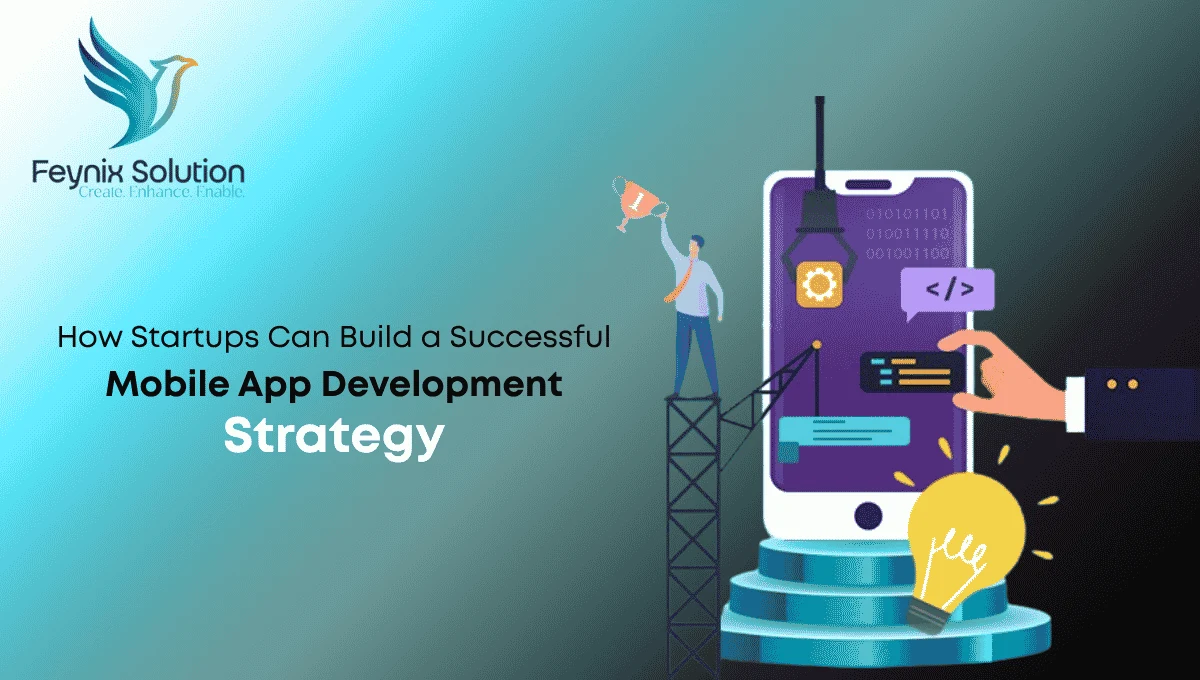
Building a mobile app is a major decision for any startup. The right development strategy helps a business validate its idea, control development costs, prepare for future growth, and deliver a reliable user experience. However, many startups focus too heavily on building features and overlook important decisions related to business goals, technology, security, scalability, and long-term maintenance. Custom mobile app development services for startups can help businesses create a development roadmap based on their specific product idea, target audience, budget, and growth plans.
Start With a Clear Business and Product Strategy
Before choosing a technology or hiring a development team, a startup should define what the application is expected to achieve.
A clear mobile app strategy should answer:
- What problem does the application solve?
- Who are the target users?
- Which features are essential for the first version?
- How will the application support business operations?
- What makes the product different from existing solutions?
These questions help IT managers and startup teams avoid investing in features that do not support the product’s primary purpose.
A successful app development strategy connects technical decisions with measurable business objectives. For example, a startup may focus on improving customer access, automating a manual process, creating a digital service, or developing a new revenue channel.
Validate the Mobile App Idea Before Full Development
One of the most important steps in startup app development is validating the idea before investing heavily in the complete product.
Startups can use several methods to evaluate their concept, including:
- Customer interviews
- Competitor analysis
- Market research
- Prototype testing
- Landing page testing
- Early user feedback
The goal is not to prove that every feature is perfect. Instead, validation helps the team understand whether the problem is meaningful to the intended audience and whether the proposed solution has practical value.
A startup may also create a clickable prototype to test user flows before development begins. This can help identify confusing navigation, unnecessary features, and potential usability problems at an earlier stage.
Define an MVP With the Right Features
A Minimum Viable Product (MVP) is an initial version of an application that includes the core functionality needed to serve its primary purpose.
The best MVP is not simply the smallest possible application. It should contain enough functionality to provide value and collect useful feedback from real users.
An MVP may include:
- User registration and login
- Core product or service functionality
- Basic user profiles
- Payment integration where necessary
- Notifications
- Admin management tools
- Analytics and reporting
Startups should separate features into three categories:
- Essential: Required for the application to function.
- Important: Useful but not necessary for the first release.
- Future: Features that can be added after user feedback and product validation.
This approach can help teams maintain a manageable development scope while keeping the product ready for future improvements.
Choose the Right Development Technology
Technology affects an app’s performance, development process, maintenance, and scalability. Startups can choose between:
Native App Development: Built specifically for Android or iOS, offering strong performance and platform integration.
Cross-Platform Development: Uses shared technologies to build apps for multiple platforms, helping startups reach Android and iOS users efficiently.
The right option depends on the target audience, performance needs, device features, budget, maintenance plans, and product roadmap. A reliable custom app development agency can help startups select technology based on their actual requirements rather than current trends.
Plan for Scalability from the Beginning
A startup may begin with a limited number of users, but the application should be designed with future growth in mind.
Scalability planning may involve:
- Flexible application architecture
- Efficient database design
- Cloud infrastructure
- API-based integrations
- Modular software components
- Performance monitoring
A scalable application can be easier to improve as user demand increases. However, scalability does not mean building every possible feature in the first version. It means making technical decisions that do not unnecessarily restrict future growth.
For IT managers, this is particularly important because poor architecture can create technical debt, slower development cycles, and expensive redevelopment requirements later.
Prioritize Security and Data Protection
Security should be part of the development strategy from the beginning rather than an afterthought.
Depending on the type of application, security planning may include:
- Secure authentication
- Data encryption
- Access control
- Secure API communication
- Input validation
- Regular security testing
- Secure third-party integrations
Applications that process customer information, payments, business data, or sensitive records require careful security planning throughout the development lifecycle.
The specific security requirements will depend on the application, data types, industry, and applicable regulations. Startups should therefore identify potential security risks during the planning stage.
Focus on User Experience and Performance
A mobile application can have strong technical functionality but still perform poorly if users find it difficult to navigate.
Effective mobile app UX should focus on:
- Simple navigation
- Clear user flows
- Fast response times
- Consistent interface design
- Accessible interactions
- Useful error messages
Performance should also be considered across different devices and network conditions. Testing only on high-end devices or fast internet connections may not provide a realistic view of the user experience.
A well-planned android App development or iOS application development project should consider the actual devices and platforms used by the target audience.
Create a Realistic Development Budget and Timeline
The cost and timeline of mobile app development depend on the project’s requirements. Important factors include:
- Number and complexity of features
- Platform requirements
- UI/UX design needs
- Backend development
- Third-party integrations
- Security requirements
- Testing requirements
- Ongoing maintenance
Startups should avoid selecting a development partner based only on the lowest initial quote. A lower upfront cost may not represent the full cost of development, maintenance, updates, and future improvements.
A better approach is to evaluate the overall value of the development plan, including the quality of the architecture, communication process, testing approach, and long-term support.
Build a Strong Testing and Launch Process
Testing should take place throughout development rather than only immediately before launch.
A complete testing process may include:
- Functional testing
- Usability testing
- Performance testing
- Compatibility testing
- Security testing
- API testing
- User acceptance testing
Before launch, the startup should also prepare:
- App store requirements
- Analytics tracking
- Customer support processes
- Error monitoring
- Backup and recovery procedures
- Post-launch update plans
A controlled launch can help the team identify issues, collect user feedback, and prioritize improvements based on actual usage.
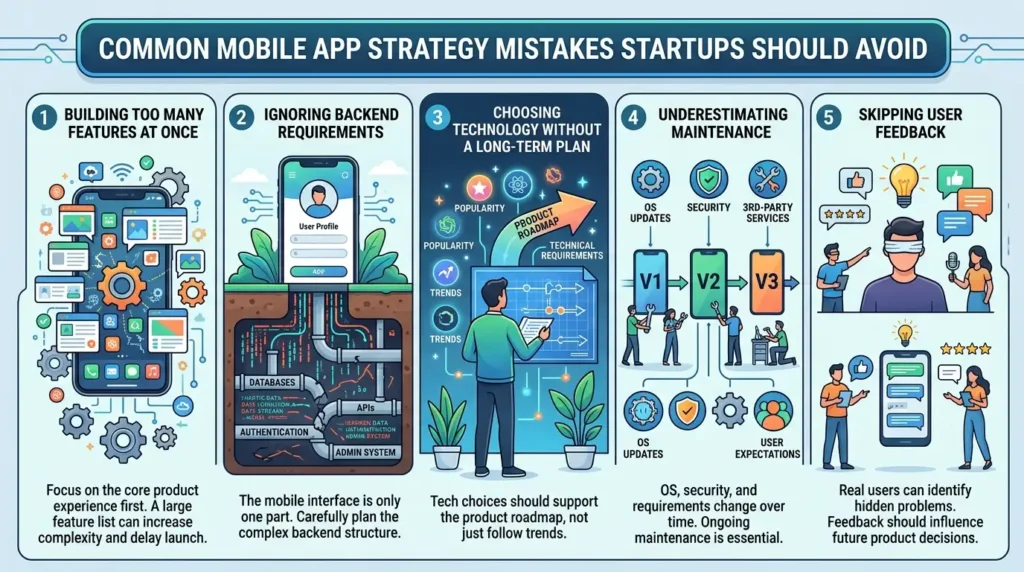
Common Mobile App Strategy Mistakes Startups Should Avoid
Several mistakes can create unnecessary challenges during mobile app development.
Building Too Many Features at Once
A large feature list can increase development complexity and delay the launch. Startups should focus on the core product experience first.
Ignoring Backend Requirements
The mobile interface is only one part of an application. The backend, database, APIs, authentication, and administration system also require careful planning.
Choosing Technology Without a Long-Term Plan
A technology choice should support the product roadmap and technical requirements rather than being based only on popularity.
Underestimating Maintenance
Mobile operating systems, security requirements, third-party services, and user expectations change over time. Ongoing maintenance is an important part of the application lifecycle.
Skipping User Feedbackd
Real users can identify problems that internal teams may not notice. Feedback should influence future product decisions.
How Feynix Solution Supports Startup App Development
Feynix Solution provides digital solutions and development services for businesses that need technology aligned with their operational and growth requirements.
For startups, the development process can include:
- Business and technical requirement analysis
- Product planning and feature prioritization
- UI/UX design
- Custom mobile application development
- Backend and API development
- Platform-specific development
- Third-party integrations
- Testing and quality assurance
- Deployment support
- Ongoing maintenance and improvements
Through custom mobile app development services for startups, Feynix Solution can help businesses plan applications around their actual product requirements instead of forcing their operations into a generic software model.
The right development approach should be based on the startup’s product goals, target users, technical requirements, and future plans.
Customer Testimonials
The development process was structured around our actual business requirements. The team helped us focus on the core application features and provided practical guidance throughout the project.
— Startup Business Owner
We needed a mobile application that could support future growth, not just a basic first release. The planning and technical discussions helped us make more informed development decisions.
— IT Manager
The communication and development process made it easier to understand the technical requirements of our application and plan future improvements.
— Business Owner
FAQs
What is a mobile app development strategy for startups?
It is a plan covering the app idea, target users, features, technology, development, security, testing, and future growth.
Should startups build an MVP before a full mobile application?
Yes, an MVP can help startups test their core idea and collect user feedback before investing in a complete application.
How do startups choose between native and cross-platform development?
The choice depends on the target platforms, performance needs, budget, device features, and long-term maintenance requirements.
How much do Custom Mobile App Development Services for Startups cost?
Costs vary based on features, platforms, design, backend development, integrations, testing, and ongoing support.
Conclusion
A successful startup app needs more than features and development. Custom mobile app development services for startups help businesses build secure, scalable, and user-focused digital products with the right strategy.
Feynix Solution can help startups plan, develop, and improve mobile applications based on their business goals and future growth needs.
Talk To Us
Facebook
Instagram
Linkedin
Pinterest
About the Author
This article was prepared by the Feynix Solution content team, which focuses on IT services, custom software development, mobile application development, web application development, and digital solutions for growing businesses and startups.