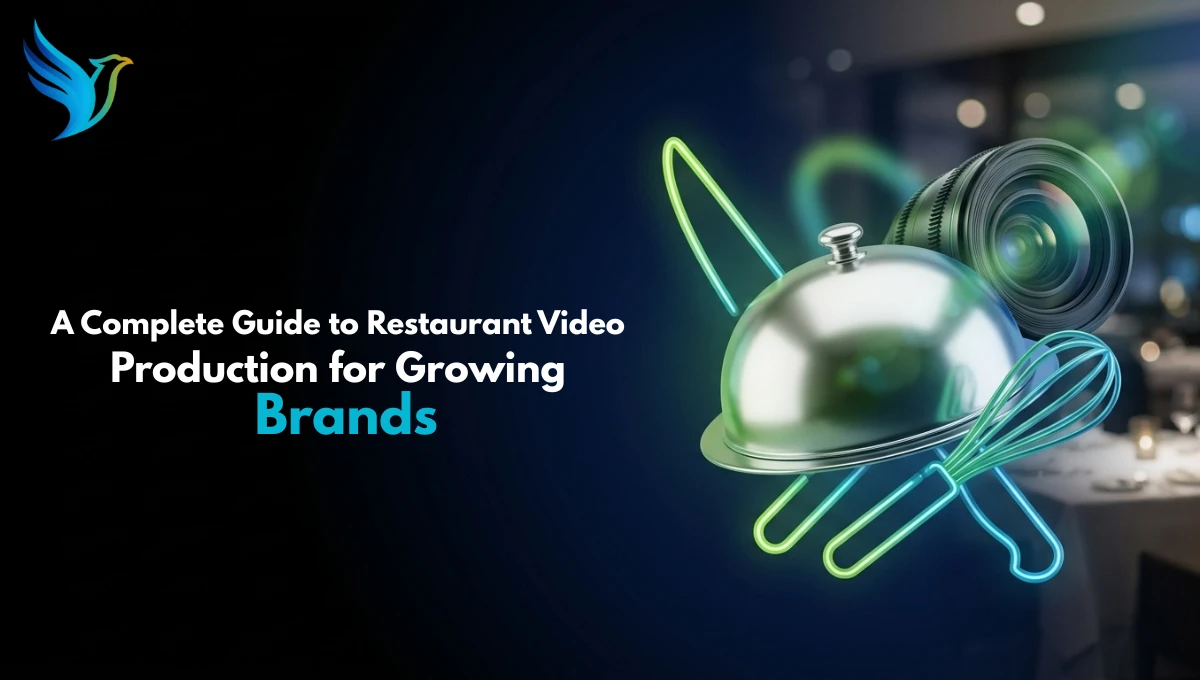
Restaurant Video Production turns food, atmosphere, and brand personality into visual stories that can attract customers before they ever visit your restaurant. For Karachi brands, the right video can make a menu item look irresistible, build trust, and give social media content a much longer working life.
What Is Restaurant Video Production?
Video production for restaurants is the professional process of planning, filming, editing, and delivering high-quality videos that showcase a dining venue, its cuisine, atmosphere, and overall brand identity. It encompasses promotional reels, digital menu displays, commercial campaigns, chef spotlights, behind-the-scenes content, and targeted social media ads. A well-crafted video does more than show food, it instantly communicates taste, presentation, service quality, and dining experience within seconds.
Why Restaurant Video Production Matters for Growing Brands
A customer scrolling Instagram or TikTok may see dozens of restaurants in a few minutes. A static image can show a burger, platter, or dessert, but video can show the steam, texture, preparation, presentation, and reaction that make the food memorable.
For growing brands, this creates several opportunities:
- Build stronger visual brand recognition
- Showcase signature dishes
- Increase social media engagement
- Support paid advertising campaigns
- Introduce new menu items
- Demonstrate restaurant ambience
- Create reusable marketing assets
- Build customer confidence before a visit
The biggest mistake is treating restaurant video as simply “recording food.” Professional production starts with understanding what the viewer should feel and do after watching.
Restaurant Video Production vs Traditional Food Photography
Photography and video serve different marketing purposes.
|
Factor |
Food Photography | Restaurant Video |
|
Visual impact |
Strong still image | Movement and storytelling |
|
Food presentation |
Excellent for menus | Shows preparation and texture |
| Social media | Posts and carousels |
Reels, Stories and ads |
| Storytelling | Limited |
Strong |
| Customer experience | Visual snapshot |
More immersive |
| Reusability | High |
Very high with multiple edits |
For a campaign, combining both can be more effective than choosing one.
Feynix Solution can also support visual branding through its Creative Content & Design Solutions, helping brands maintain consistency across different content formats.
Types of Restaurant Videos Brands Can Produce
Restaurant Promo Videos
A promotional video focuses on the reasons customers should visit or order.
It may highlight a signature dish, special offer, restaurant atmosphere, chef, service, or overall dining experience.
For local campaigns, Restaurant Promo Video Production Karachi can be particularly useful when the goal is to create location-focused content for social media and digital advertising.
Restaurant Menu Videos
A menu video gives individual dishes more context than a standard menu photograph.
A Restaurant Menu Video Shoot Karachi may include close-up food shots, ingredient preparation, plating, serving, and final presentation.
Short vertical clips are especially useful for Instagram Reels, TikTok, and Stories.
Restaurant Commercial Videos
Commercial videos are usually more strategically planned and may support a larger branding or advertising campaign.
Restaurant Commercial Video Production Karachi can include scripting, storyboarding, professional lighting, multiple locations, talent direction, voice-over, sound design, and post-production.
Cinematic Product Videos in Karachi
Cinematic product videos use lighting, close-up shots, and camera movement to showcase food in an engaging way. They can highlight texture, presentation, preparation, and signature dishes for social media, websites, and digital campaigns.
Behind-the-Scenes Videos
Customers often enjoy seeing what happens behind the counter.
Showing chefs preparing food, staff getting ready for service, ingredients being handled, or dishes being plated can make the brand feel more authentic.
How a Professional Food Video Is Planned
A good shoot starts long before the camera arrives.
A professional Food Video Production Company Karachi should first understand the restaurant’s audience, menu, brand positioning, platforms, and campaign objective.
The production process generally includes:
- Creative concept development
- Script or shot-list preparation
- Location assessment
- Menu selection
- Lighting planning
- Camera and lens selection
- Food styling
- Filming
- Audio recording
- Editing and color correction
- Platform-specific exports
This planning prevents a common problem: producing attractive footage that does not actually support the restaurant’s marketing goals.
Choosing the Right Dishes for a Video Shoot
Not every menu item deserves equal screen time.
From a practical production perspective, dishes with layers, movement, texture, color, steam, pouring, cutting, stretching, or finishing touches often create stronger footage.
For example, a burger can be filmed during assembly, sauce application, cutting, and final presentation rather than simply sitting on a plate.
Likewise, a BBQ platter can benefit from close-ups of grilling, smoke, sizzling surfaces, cutting, and serving.
Production Quality: What Actually Matters?
High production quality does not necessarily mean using the most expensive equipment.
Camera and Lens Selection
The camera should support the final platform and shooting conditions. Lenses matter because food often requires controlled close-ups without making the dish look distorted.
Macro or close-focus capabilities can be valuable for textures such as melted cheese, crispy coatings, sauces, and grilled surfaces.
Lighting
Lighting is one of the biggest differences between ordinary restaurant footage and professional food content.
Soft, controlled lighting can reveal texture without creating harsh reflections on sauces, glassware, plates, or glossy packaging.
Material and Surface Considerations
“Material quality” in food production is not about the thickness of the video itself. It relates to the physical elements appearing on camera.
Plates, tables, packaging, utensils, backdrops, and serving boards should complement the food rather than distract from it.
Likewise, props should be durable enough to survive repeated takes without becoming visibly damaged or inconsistent.
Video Durability and Performance
A professionally produced video should remain useful beyond its launch date.
This is why brands should consider:
- High-resolution master files
- Multiple aspect ratios
- Short-form cutdowns
- Clean versions without promotional text
- Proper file organization
- Captions and subtitle versions
- Platform-specific exports
Think of the master footage as a content asset. One well-planned shoot can potentially generate a hero video, several Reels, Stories, advertisements, menu clips, and behind-the-scenes posts.
Video “Thickness” and Technical Quality
Unlike flooring or physical products, video does not have literal thickness or wear layers. The comparable performance factors are resolution, bitrate, frame rate, compression, color depth, and export quality.
For example, overly compressed footage may lose fine food textures, while poor lighting can make even high-resolution footage look weak.
The objective is not simply shooting at the highest possible resolution. It is producing footage that remains sharp and attractive after editing, compression, and social media uploading.
Safety Considerations During Restaurant Shoots
Restaurant production also requires practical safety planning.
Hot grills, boiling liquids, knives, wet floors, electrical cables, and crowded kitchen areas can create unnecessary risks.
A professional crew should:
- Keep cables secured and away from walkways
- Maintain distance from cooking equipment
- Avoid blocking kitchen staff
- Keep equipment stable
- Coordinate movement with restaurant employees
- Protect cameras from heat, steam, and spills
Good production should never interfere with normal kitchen operations.
Cost vs Value: What Should Brands Consider?
The cheapest production option is not always the best value.
Instead of comparing companies only by price, evaluate what is included in the production process.
|
Low-Cost Approach |
Professional Production |
|
Limited planning |
Creative planning |
|
Basic lighting |
Controlled lighting |
| Few camera angles |
Purposeful shot variety |
| Minimal editing |
Professional post-production |
| One final video |
Multiple content assets |
| Short-term use |
Long-term content value |
A restaurant should ask: How much usable marketing content will this shoot actually produce?
That question gives a better picture of value than the production price alone.
Expert Tips for Better Restaurant Videos
Plan for Vertical and Horizontal Content
Do not wait until editing to decide where the video will be used.
If Instagram Reels are important, compositions should be planned for vertical framing from the beginning.
Film More Than the Hero Shot
The final dish is important, but supporting footage makes the edit more engaging.
Capture preparation, ingredients, hands, cooking action, plating, restaurant ambience, staff interaction, and customer-facing moments.
Avoid Over-Styling the Food
Food should look appetizing but believable.
Overloading a plate with props or editing colors too aggressively can make the final result feel artificial.
Capture Natural Sound
The sound of grilling, chopping, pouring, sizzling, or serving can make food content considerably more immersive.
Common Restaurant Video Production Mistakes
Focusing Only on the Food
A restaurant is more than its menu.
If the video never communicates atmosphere, people, service, or brand personality, it may struggle to differentiate the business.
Using One Video Everywhere
A 60-second commercial does not automatically work as a Reel, Story, website banner, and advertisement.
Each platform has different viewing behavior.
Ignoring the First Few Seconds
The opening needs to create immediate visual interest.
Start with the strongest food action, an attractive finished dish, a compelling restaurant moment, or another scene that gives viewers a reason to continue watching.
Forgetting Brand Consistency
Video should support the restaurant’s broader identity.
Consistent colors, typography, messaging, styling, and tone can strengthen recognition. Brands developing this foundation can also benefit from professional Brand Strategy & Identity Development.
When Should a Restaurant Hire a Professional Production Team?
Professional production becomes particularly valuable when a restaurant is:
- Launching a new brand
- Introducing a new menu
- Promoting a signature dish
- Running paid advertising
- Opening a new location
- Rebranding
- Building social media presence
- Creating content for a major campaign
For simple day-to-day content, smartphones may be enough. For important campaigns, professional production can provide stronger consistency and more reusable assets.
If you’re looking to hire a professional video production team, Feynix Solution has the expertise to bring your restaurant brand to life visit our Enterprise Branding services today.
Restaurant Video Production Portfolio
A strong Restaurant Video Production Portfolio shows how professional visuals can turn food, ambience, and brand personality into engaging, memorable content. At Feynix Solution, restaurant projects focus on capturing signature dishes, preparation details, presentation, and the overall dining experience in a way that grabs attention and keeps viewers engaged.
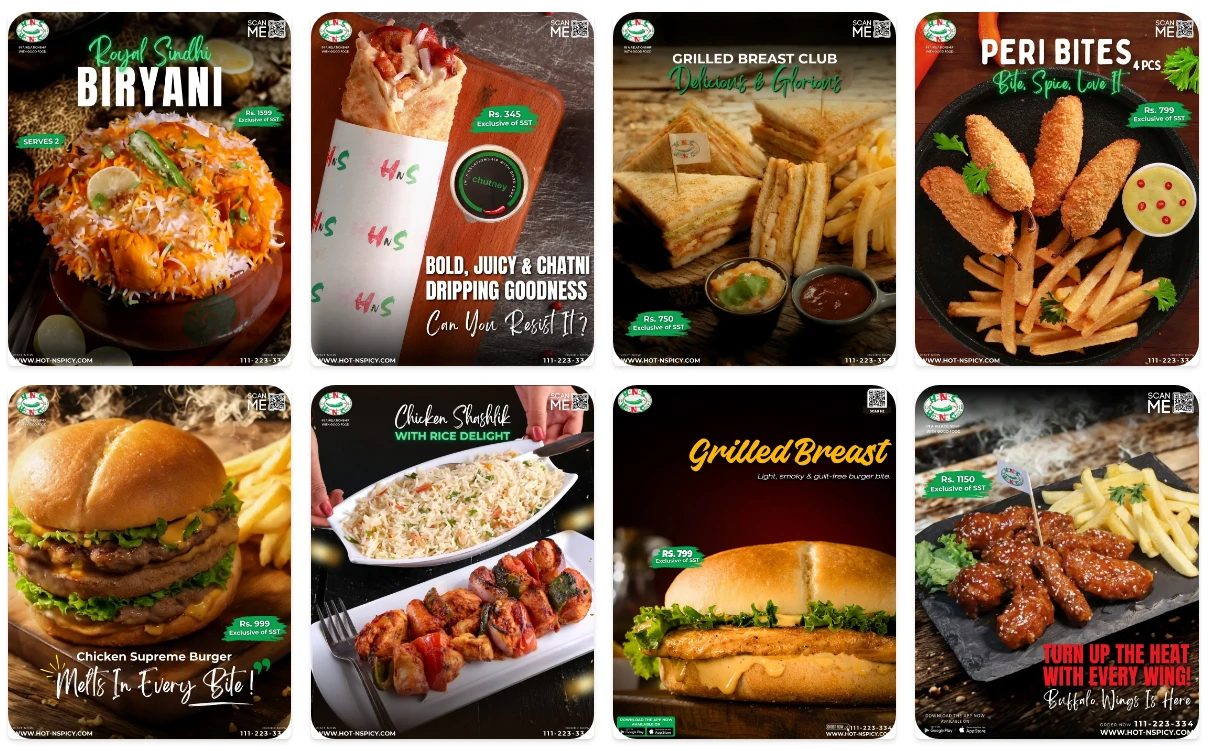
Real-World Client Experience: Hot N Spicy
Feynix Solution has also worked on visual content for Hot N Spicy, a popular restaurant brand in Karachi.
The practical lesson from restaurant content production is straightforward: the camera is only one part of the result. Food presentation, lighting, composition, timing, ambience, and understanding how customers respond to visual content all influence the final video.
For a restaurant like Hot N Spicy, showcasing signature dishes, preparation details, sizzling BBQ, rolls, burgers, and the overall dining experience can make the content more engaging and authentic. The same approach applies to any restaurant video production project where the goal is to turn food visuals into stronger brand awareness and customer interest.
People Also Asked
What is Restaurant Video Production?
It is the planning, filming, editing, and delivery of professional visual content designed to promote a restaurant, its food, atmosphere, services, or brand.
How long should a restaurant promotional video be?
The ideal length depends on the platform and objective. Short-form social content generally benefits from concise storytelling and strong visuals.
Is professional restaurant video production worth it?
Yes, when the content supports an important marketing objective and can be reused across social media, advertising, websites, and campaigns.
What should a restaurant video include?
Strong videos often combine food preparation, hero dishes, restaurant ambience, staff moments, customer experience, branding, and clear visual storytelling.
Can one restaurant shoot create multiple videos?
Yes. With proper planning, one shoot can produce a main video plus shorter clips, social media Reels, Stories, advertisements, and supporting content.
Conclusion
Restaurant Video Production is most effective when it combines food presentation, storytelling, brand strategy, technical quality, and a clear marketing purpose.
For Karachi restaurants, the goal should not simply be to produce attractive footage. The better approach is to create content that keeps working across social media, advertising, websites, and future campaigns.
Feynix Solution turns restaurant concepts into engaging brand assets for brands looking for professional visual content and digital marketing support, through its official website. Feynix Solution serves clients in Pakistan and around the world — give us the opportunity, we will want to grow your business, and we will satisfy you with our work.
Author Bio
Faseeh Khan is a professional Content Writer at Feynix Solution, bringing 7 years of experience in SEO content writing, digital marketing, and conversion-focused copywriting. He creates human-first, search-optimized content that follows Google’s latest Helpful Content System, E-E-A-T guidelines, and supports businesses in improving their online visibility.