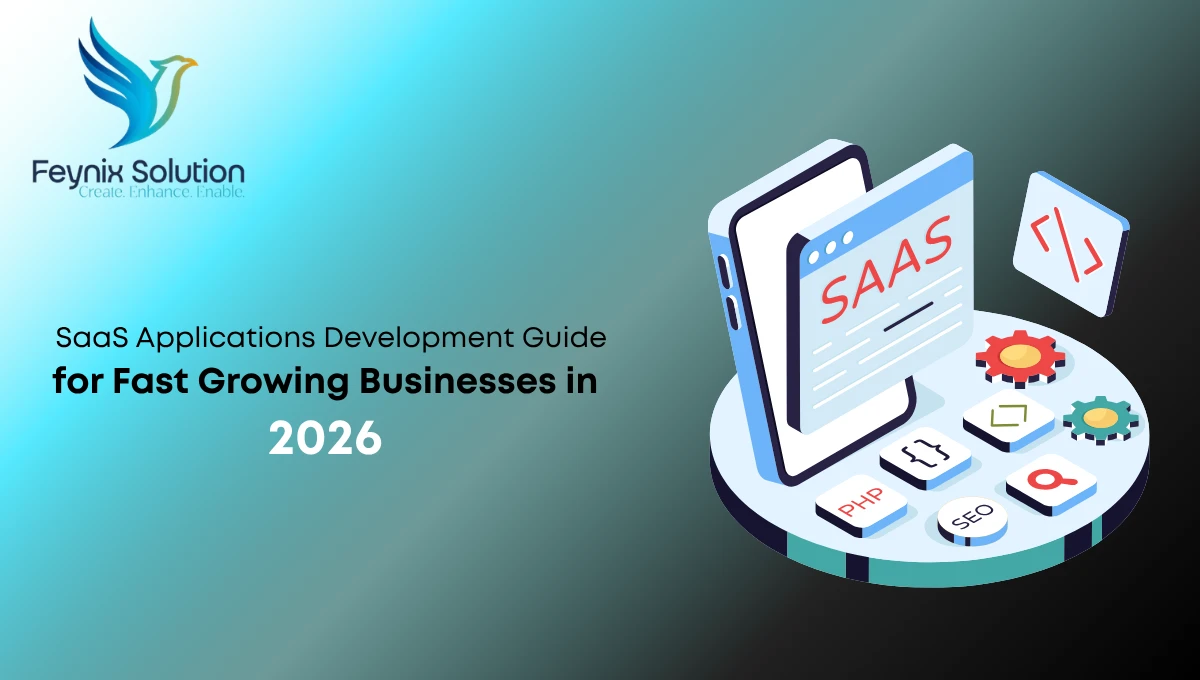
SaaS Applications Development helps businesses build cloud-based software that users can access anytime through a web browser or mobile app. Unlike traditional software, SaaS application development enables scalable, subscription-based solutions that are easier to maintain and receive automatic updates, making them ideal for fast-growing businesses in 2026.
Growing a business is exciting until outdated software starts slowing everything down. If your team struggles with disconnected systems, manual work, or software that cannot scale, SaaS application development offers a practical way to build secure, flexible, and future-ready platforms that grow alongside your business.
Why SaaS Applications Development Is Growing Faster Than Ever
Businesses across the USA are shifting from traditional software to cloud-based platforms because they need flexibility, lower operational costs, and continuous innovation. Modern customers also expect software that works seamlessly across devices while providing secure, real-time access.
Whether you’re launching a startup or modernizing enterprise operations, investing in SaaS application development services creates long-term business value.
Some of the biggest reasons include:
- Lower infrastructure costs
- Faster deployment
- Automatic updates
- Better data security
- Easy scalability
- Remote accessibility
- Subscription-based recurring revenue
What Is SaaS Applications Development?
SaaS application development is the process of designing, developing, deploying, and maintaining cloud-hosted software applications that customers access through the internet instead of installing them locally.
Unlike desktop software, SaaS applications are centrally managed, continuously updated, and built to support multiple users while maintaining security and performance.
Common examples include:
- CRM software
- Project management platforms
- Accounting software
- Healthcare portals
- HR management systems
- Learning Management Systems (LMS)
Why Fast Growing Businesses Choose SaaS
Companies scaling quickly often outgrow traditional software because expansion demands flexibility.
Benefits include:
|
Traditional Software |
SaaS Platform Development |
|
Manual updates |
Automatic updates |
| High upfront cost |
Subscription pricing |
| Limited scalability |
Unlimited scaling |
| Local installation |
Cloud access anywhere |
| Hardware dependency |
Browser & mobile access |
This flexibility makes SaaS platform development the preferred approach for businesses planning long-term growth.
Real-World Example
One retail business initially managed inventory using spreadsheets and desktop software.
As online orders increased, syncing data became difficult. After moving to a custom SaaS inventory platform, the company reduced manual errors, improved order processing, and gained real-time reporting across multiple warehouse locations.
This practical scenario demonstrates how cloud-native software supports business expansion without increasing operational complexity.
Core Features Every SaaS Platform Should Include
Secure Authentication
Multi-factor authentication and role-based permissions protect business data.
Cloud Infrastructure
Reliable cloud hosting ensures maximum uptime and performance.
Subscription Management
Built-in billing systems simplify recurring payments.
API Integrations
Modern SaaS software connects with CRM, payment gateways, accounting tools, and marketing platforms.
Analytics Dashboard
Real-time business insights improve decision-making.
Multi-Tenant Architecture
Allows multiple customers to securely use the same software while keeping data isolated.
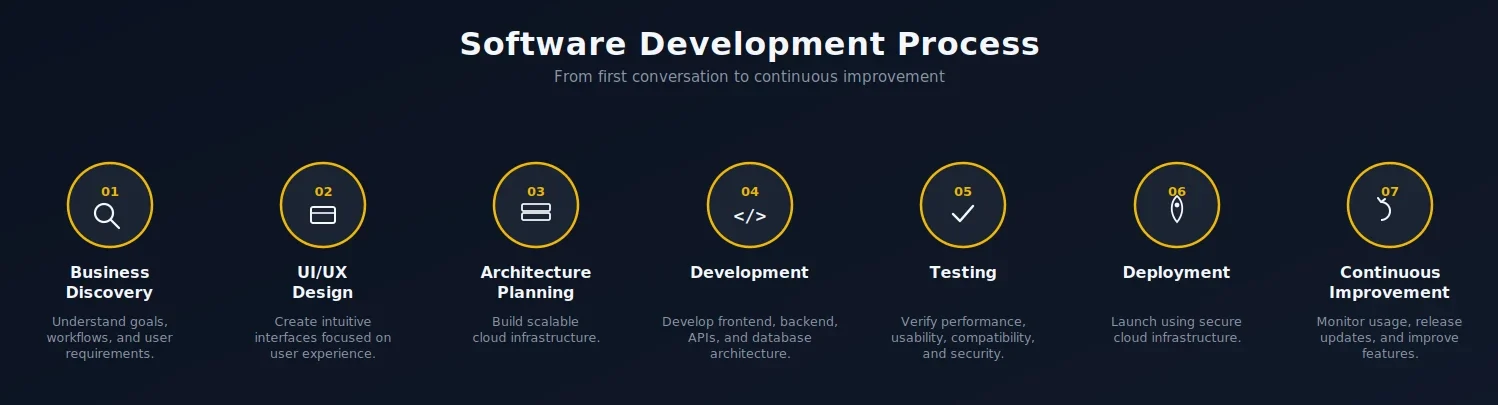
SaaS Applications Development Process
Business Discovery
Understand goals, workflows, and user requirements.
UI/UX Design
Create intuitive interfaces focused on user experience.
Architecture Planning
Build scalable cloud infrastructure.
Development
Develop frontend, backend, APIs, and database architecture.
Testing
Verify performance, usability, compatibility, and security.
Deployment
Launch using secure cloud infrastructure.
Continuous Improvement
Monitor usage, release updates, and improve features.
Businesses looking for tailored software solutions can also explore Custom App Development
SaaS Application Development Services Businesses Need
Professional SaaS application development services usually include:
- Product strategy
- UX/UI design
- Cloud migration
- Backend development
- API integrations
- DevOps
- Quality assurance
- Security testing
- Maintenance
- Feature enhancements
Working with an experienced SaaS software development company reduces development risks while improving product quality.
Custom SaaS Application Development vs Ready-Made Platforms
|
Custom SaaS Application Development |
Off-the-Shelf Software |
|
Built for your workflow |
Generic features |
| Highly scalable |
Limited flexibility |
| Custom integrations |
Restricted integrations |
| Competitive advantage |
Same as competitors |
| Long-term ROI |
Ongoing limitations |
For businesses with unique workflows, Custom SaaS application development delivers significantly greater long-term value.
If you’re evaluating technology choices, this guide on Cross Platform App Development Pros and Cons offers valuable insights.
Enterprise SaaS Development
Large organizations often require:
- Enterprise security
- Compliance support
- Large database handling
- Role-based permissions
- AI automation
- Advanced reporting
- ERP integrations
This is where Enterprise SaaS development becomes essential.
Cloud Application Development Explained
Modern businesses no longer purchase software, they subscribe to cloud services.
Cloud application development enables:
- Global accessibility
- Automatic backups
- Disaster recovery
- Elastic scaling
- High availability
- Lower infrastructure costs
Cloud-native development also improves deployment speed and simplifies future updates.
SaaS vs Traditional Software
Advantages
- Lower upfront investment
- Faster updates
- Better scalability
- Remote access
- Predictable subscription model
- Easier maintenance
Challenges
- Requires internet connectivity
- Ongoing hosting costs
- Security must be actively managed
- Vendor dependency
For most growing businesses, the advantages greatly outweigh the limitations.
Expert Insights From Real Development Projects
After working on multiple cloud software projects, one pattern consistently stands out.
Businesses often focus heavily on adding features while overlooking scalability.
The most successful SaaS products invest early in:
- Database optimization
- Clean API architecture
- Security-first development
- User onboarding
- Performance monitoring
These areas rarely receive attention in beginner guides, yet they significantly impact long-term success.
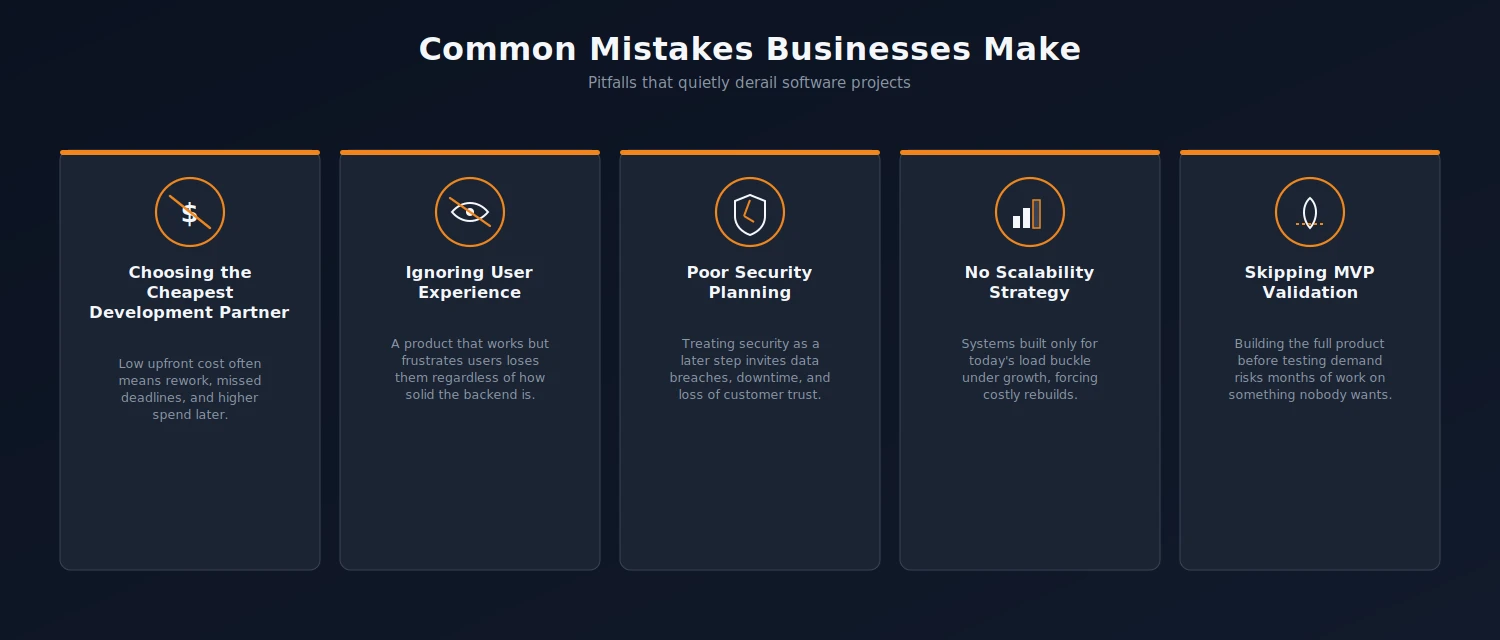
Common Mistakes Businesses Make
- Choosing the Cheapest Development Partner
- Ignoring User Experience
- Poor Security Planning
- No Scalability Strategy
- Skipping MVP Validation
Choosing the Right SaaS App Development Company
A reliable SaaS app development company should offer:
- Proven portfolio
- Cloud expertise
- Security-first mindset
- Transparent communication
- Agile development
- Ongoing maintenance
- Post-launch support
Companies offering complete Business Technology Solutions can also help align software with broader digital transformation goals:
Mobile Integration Matters
Many SaaS products now require mobile access alongside web platforms.
Businesses expanding into mobile can benefit from High Quality Custom iOS App Development Services
Cost vs Value Analysis
|
Investment Area |
Business Value |
|
Custom Development |
Long-term flexibility |
|
Cloud Infrastructure |
High availability |
| Security |
Customer trust |
| Automation |
Reduced operational costs |
| Analytics |
Better decisions |
| Maintenance |
Product longevity |
Although custom SaaS requires a larger initial investment, businesses typically recover costs through efficiency, scalability, and recurring revenue opportunities.
Customer Testimonials
Michael Johnson – Retail Business Owner
Feynix Solution transformed our manual processes into a cloud platform that now supports multiple locations effortlessly.
Sarah Williams – Healthcare Startup Founder
The team’s technical knowledge and communication made the entire SaaS development process smooth from planning to launch.
Daniel Carter – Logistics Company Director
Our custom SaaS platform significantly improved reporting, user management, and operational efficiency.
People Also Asked
Is SaaS better than traditional software?
Yes. SaaS offers automatic updates, scalability, cloud accessibility, and lower upfront costs compared to traditional software.
How long does SaaS application development take?
Most custom SaaS platforms require 3–12 months depending on complexity, integrations, and feature requirements.
What industries benefit most from SaaS?
Healthcare, finance, education, retail, logistics, manufacturing, and professional services all benefit from SaaS platforms.
Why choose custom SaaS application development?
Custom solutions align with your exact workflows, improve efficiency, and create a competitive advantage that generic software cannot provide.
What makes a good SaaS software development company?
Look for cloud expertise, security knowledge, scalable architecture, transparent communication, and long-term support capabilities.
Conclusion
Fast-growing businesses need software that evolves with changing customer expectations and operational demands. SaaS Applications Development provides the flexibility, scalability, and long-term value required to compete in today’s digital economy. Whether you’re launching a new SaaS product, modernizing legacy systems, or building a cloud-native platform, choosing the right development partner makes all the difference.
At Feynix Solution, we specialize in delivering scalable, secure, and high-performance software tailored to your business goals. From strategy and architecture to deployment and ongoing support, our team helps organizations build reliable SaaS platforms designed for long-term success.
Author Bio
Feynix Solution Content Team
The Feynix Solution Content Team works alongside software architects, cloud engineers, and digital transformation specialists to create practical, experience-driven resources for businesses. Our content reflects current industry trends, proven development practices, and Google’s latest SEO standards, helping organizations make informed technology decisions with confidence.